
Last Updated: November 16, 2026
Quick Summary
Choose a traffic control company that builds and runs the full temporary traffic control plan, not just a truck with flashing lights. Demand current flagger certifications, a named traffic control supervisor, MUTCD-compliant plan drawings, insurance naming you as additional insured, and a written staffing backup plan before the first shift.
- Match the crew to the roadway: rural roads need one or two flaggers and a pilot car, interstates need a full TTC plan and attenuator.
- The market price for traffic control services sits at $1,620 per day, per IBISWorld’s 2026 procurement benchmark.
- Equipment rental leaves you owning placement, inspection, and compliance risk, while full-service bundles devices, crews, and planning.
- Estimate cost by pricing shift count, crew size, device package, and mobilization distance separately.
- Smart work zone devices only work with a power and connectivity plan, and the TTC plan must name the fallback.
Table of Contents
- What a Traffic Control Company Actually Handles on a Highway Project
- Highway Work Zone Traffic Control: Matching Crews to Your Roadway Conditions
- Vetting Criteria for Traffic Control Services for Road Construction
- Flagging Services for Road Work: What Certified Crews Should Deliver
- Traffic Control Equipment Rental vs. Full-Service Provision
- Cost Estimation Models for Traffic Control Services
- Smart Work Zones and Technology Integration in Traffic Control Operations
- Request a Quote for Your Next Highway Work Zone
- Frequently Asked Questions
What a Traffic Control Company Actually Handles on a Highway Project
A traffic control company for highway work does far more than park a truck with flashing lights. It builds and runs the temporary traffic control plan that keeps crews, drivers, and pedestrians separated for the life of the project. According to IBISWorld’s 2026 procurement benchmark, the market price for traffic control services sits at $1,620 per day, and prices rose at a 6.8% compound annual growth rate from 2023 to 2026. That is real money, and it buys a specific scope of work.
At ALL Ways Safe, we see the same pattern on nearly every job: a project manager hires on day rate and never asks what the day rate includes.
Here is the honest answer. A full-service traffic control provider handles the Maintenance of Traffic plan, permit coordination with the state DOT, certified flaggers and a traffic control supervisor, device placement and daily inspection, and emergency response when a lane closes at 2 a.m. The 2026 AGC & HCSS Highway Work Zone Safety Survey found that sixty percent of highway construction firms reported at least one car crash in their work zones, which is exactly why the plan, not just the flagger, is the product.
Below, we break down how to match crews to roadway conditions, what to put in a vetting checklist, and how to estimate cost without guessing.
Highway Work Zone Traffic Control: Matching Crews to Your Roadway Conditions
Not every work zone needs the same crew. A two-lane rural shoulder repair and a multi-lane urban interchange closure require different staffing, different devices, and different levels of supervision.
Match the crew to the roadway, not to the invoice:
- Two-lane rural road: one or two certified flaggers with a pilot car, plus portable signage
- Multi-lane arterial: lane closure taper setup, arrow boards, and a traffic control supervisor on site
- Interstate or high-volume highway: full TTC plan, crash attenuator, and coordination with the DOT traffic management center
- Night work: reflective devices, lighting, and crews trained on reduced-visibility setups
The ATSSA case study resource on technology solutions for TTC operations documents five examples of agencies weighing Automated Flagger Assistance Devices against Portable Traffic Signals, and the Michigan Department of Transportation used AFADs across several two-lane highway projects. The lesson: the right device depends on sight distance, traffic volume, and how long the closure lasts.
Vetting Criteria for Traffic Control Services for Road Construction
The best way to vet a provider is to demand documentation before the first shift, not after the first incident. Traffic control services for road construction live or die on certification, insurance, and staffing depth.
Run this checklist before you sign:
- Current certifications for every flagger, plus a named traffic control supervisor
- MUTCD-compliant TTC plan drawings for your specific site
- Certificate of insurance naming your organization as additional insured
- Written staffing backup plan for no-shows and call-offs
- Documented device inventory, including arrow boards and attenuators
- Emergency mobilization commitment in hours, not days
- References from projects of similar size and roadway type
A common mistake is treating certification as a box to tick on a bid form. Ask to see the cards. Ask who the supervisor will be. Ask what happens when a flagger calls out sick at 4 a.m. The answers separate a real operation from a dispatch number.
Flagging Services for Road Work: What Certified Crews Should Deliver
Certified flagging crews should deliver correct device use, clear communication with drivers, and a work zone that stays compliant through every shift change.
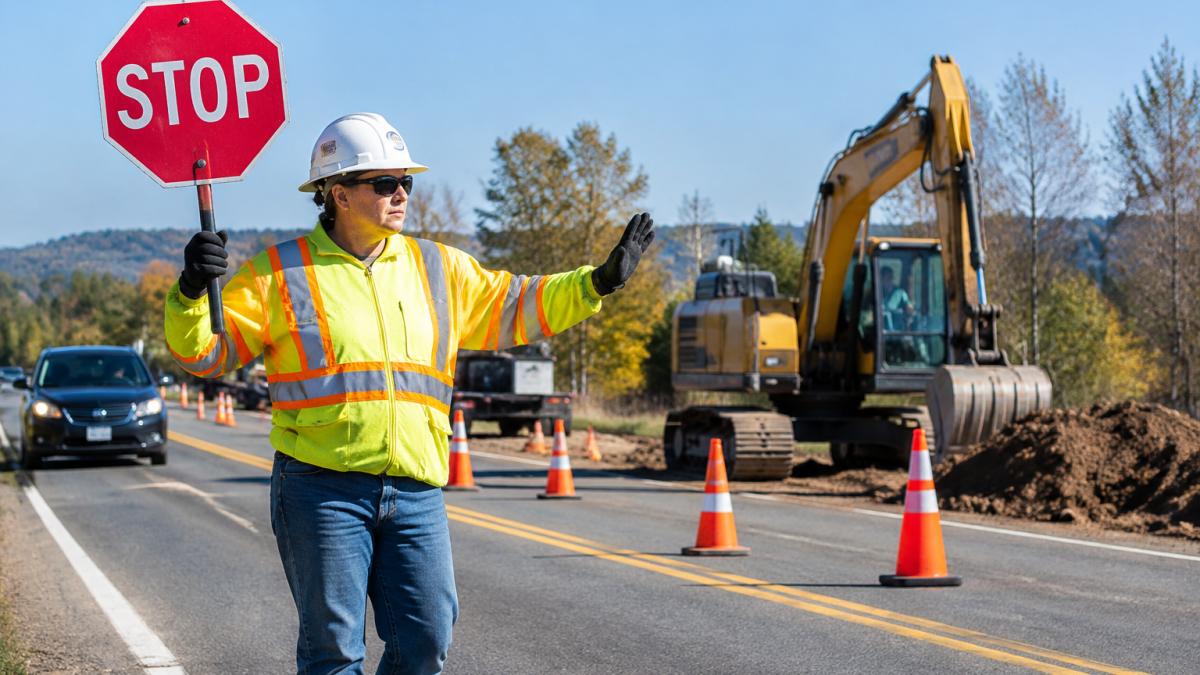
Flagging services for road work are the most visible part of the job and the easiest to get wrong. A flagger who stands in the wrong spot, or who waves a driver through too early, creates the exact crash exposure the AGC survey measured. Good crews set the taper correctly, position themselves with an escape route, and radio the supervisor the moment traffic backs up beyond the plan.
What most guides miss is the supervisor ratio. A flagger manages one lane. A supervisor manages the whole zone, including device inspection, plan adjustments, and the paperwork your DOT inspector will ask for.
Traffic Control Equipment Rental vs. Full-Service Provision
Equipment rental looks cheaper on paper. The decision hinges on four variables: who holds the certified labor, who owns placement and inspection, who carries the liability, and how fast the site can scale up or down.
Traffic control equipment rental covers the hardware: barricades, cones, arrow boards, portable traffic signals, and signage. You supply the labor, the plan, and the insurance. Full-service provision bundles devices, certified crews, planning, and compliance into one contract.
| Option | What You Get | Best For | Watch Out For |
|---|---|---|---|
| Equipment rental only | Devices delivered to site | Firms with in-house certified crews and a named TCS | You own placement, inspection, and compliance risk |
| Full-service provision | Devices, flaggers, supervisor, plan | Most highway and utility projects | Confirm what the day rate includes, supervisor hours and night differentials are the usual exclusions |
| Hybrid | Rental plus contracted flaggers | Short-duration shoulder work | Split accountability when an inspector finds a bad taper |
Watch out: renting devices and staffing separately splits responsibility. When an inspector finds a bad taper, both vendors point at each other, and the project manager absorbs the delay.
Pricing depends on shift count, crew size, device package, and mobilization distance, so the same project can price differently depending on how the scope is written. For a current quote, check our website or contact ALL Ways Safe directly.
A practical way to compare: build the rental quote and the full-service quote against the same shift count and the same device package, then add the cost of the labor you would have to supply yourself.
Three questions separate a real full-service offer from a rental contract with a labor line item:
- Who inspects the devices each shift, and who signs the inspection log your DOT inspector will ask for?
- Who is named as additional insured on the certificate, and does the vendor’s coverage extend to device placement and removal?
- Who mobilizes when a device fails at 2 a.m., the rental desk or a crew?
If the answers point back to your own staff, you are buying rental with extra steps. If they point to the vendor, you are buying full-service, and the day rate should reflect it.
Cost Estimation Models for Traffic Control Services
Traffic control pricing depends on four inputs: shift count, crew size, device package, and mobilization distance. Estimate each one separately to understand the total.
Use this model:
- Shift count: number of work days × shifts per day
- Crew size: flaggers plus supervisor, priced per shift
- Device package: daily rental rate for each device type
- Mobilization: transport and setup time per move
Get the scope in writing line by line, because the cheapest bid is often the one that excludes supervisor hours and night differentials.
Smart Work Zones and Technology Integration in Traffic Control Operations
Smart work zones use connected devices, real-time traffic data, and automated flagging to reduce the number of people standing in live lanes. The useful question for a project manager is not whether the technology exists, but which device fits which closure, what it changes about staffing, and where it breaks down.
Technology integration in traffic control operations is where the industry is heading. Automated Flagger Assistance Devices let one operator control a closure remotely. Portable traffic signals handle alternating one-lane traffic without a person holding a paddle. Queue detection systems warn the supervisor before a backup reaches a dangerous length.
The device decision comes down to three site conditions:
- Sight distance: short sight distance favors AFADs and portable signals over a flagger standing in the lane, because the device can be positioned where a person cannot safely stand.
- Traffic volume: high-volume alternating operations favor portable signals, which cycle predictably and do not tire; low-volume rural work often does not justify the setup.
- Closure duration: a one-shift shoulder repair rarely pays back the mobilization of a smart work zone; a multi-week lane closure usually does.
What the technology changes is staffing geometry, not the plan. An AFAD lets one operator manage a closure that would otherwise need two flaggers, which shifts labor cost but adds a device that must be inspected, powered, and maintained. Portable signals remove the paddle-holder from the lane but add a failure mode, a dead signal at shift change is a lane closure with no controller. Queue detection warns the supervisor before a backup reaches a dangerous length, but only if someone is watching the alert.
Watch out: smart work zone devices are only as good as their power and connectivity plan. A solar-powered AFAD with a drained battery at 5 a.m. is a flagger with no paddle, and the TTC plan has to name the fallback.
None of it replaces the plan. Technology changes who stands where, not whether the TTC plan is correct. For project managers who want to keep reading on these setups, our blog covers planning and field practice in more depth.
Request a Quote for Your Next Highway Work Zone
The right traffic control partner shows up with certifications, a written plan, and a backup crew already named. Everything else is a promise.
At ALL Ways Safe, we are available 24 hours a day, 7 days a week, 365 days a year, and we are certified by the Women’s Business Enterprise National Council as a woman-owned, family-operated business. We specialize in smart work zones and detailed planning, and we provide rapid emergency and storm response across the Greater Tri-State and Mid-Atlantic regions.
Get started with ALL Ways Safe and put a certified crew and a compliant plan on your next highway work zone.
Frequently Asked Questions
How do I choose a traffic control company for highway work?
Start with verification: ask for MUTCD-compliant training records, state DOT certifications, and proof of insurance. Then check planning depth, whether the provider builds a written temporary traffic control plan or just sends flaggers. Confirm staffing guarantees and emergency response times in writing. Work zone crashes are a real risk, so safety process matters. Request references from projects similar in size and traffic volume to yours.
How much does traffic control cost for highway work?
Real costs depend on shift length, number of flaggers, equipment such as barricades and portable signals, night or weekend premiums, and site complexity. For a quote for your project, contact ALL Ways Safe. Ask providers for a per-shift breakdown rather than a lump sum so you can compare bids accurately.
What certifications should highway traffic control crews have?
Flaggers should hold current certification through a recognized program, typically aligned with MUTCD Part 6 and your state DOT’s requirements. Supervisors need additional traffic control supervisor training. Ask for certificates by name, not just a verbal assurance, and confirm they are current. For specialty work, check for training on automated flagger assistance devices and portable traffic signals.
Who is responsible for traffic control on a highway construction project?
The contractor or project owner is ultimately responsible for the temporary traffic control plan and its compliance with MUTCD and state DOT requirements. The traffic control company executes that plan, supplies certified flaggers and devices, and adjusts setups as conditions change. Contracts should spell out who writes the plan, who inspects the setup, and who responds when conditions shift mid-shift. Clarify this before mobilization, because responsibility gaps are where citations and crashes happen.
