
Last Updated: November 12, 2026
Quick Summary
To hire flaggers for a construction site, first confirm every worker is certified and trained under OSHA standard 1926.201(a), then verify their certification with the issuing body before you commit. Decide between direct hire and a staffing agency, and confirm insurance, equipment, and a written traffic control plan before crews arrive.
- Every flagger must be certified and trained under OSHA standard 1926.201(a) before working your site.
- Verify certification against the specific issuing body, since requirements vary by state and municipality.
- Direct hire suits long projects with stable schedules; agencies provide backup coverage and certification tracking.
- Ask providers to break down shift rates, minimum hours, and call-off terms in writing.
- Confirm general liability, workers’ comp, and additional insured status before crews arrive.
Table of Contents
- Start With the Legal Requirements Before You Hire Flaggers
- Traffic Control Certification Requirements You Must Verify
- Staffing Agency vs. Direct Hire: Which Fits Your Project
- How to Create a Traffic Control Plan Before Crews Arrive
- The Cost of Traffic Control Services per Hour and What Drives It
- Vetting Checklist: Screening Flaggers and Staffing Partners
- Insurance, Liability, and Equipment You Need in Place
- Get a Quote and Lock In Your Certified Flagger Crew
- Frequently Asked Questions
Start With the Legal Requirements Before You Hire Flaggers
The first rule of how to hire flaggers for a construction site is simple: you cannot hire anyone until you know what the law demands.
Get this wrong and you face citations, stopped work, and a crew standing around while a compliance officer writes notes. The average yearly pay for a traffic flagger runs $60,162.00, per ZipRecruiter’s national salary data.
What OSHA 1926.201(a) Requires of Every Flagger
The rule requires certified, trained flaggers on every site where flagging operations control traffic. In practice, that means three things you must confirm before anyone picks up a paddle:
- A current certification card or training record
- Training that covers work zone safety and hazard identification
- Proof the worker understands the site safety plan
Ask for documents, not promises. Keep copies on file.
Traffic Control Certification Requirements You Must Verify
Traffic control certification requirements vary by state, and that is where most hiring mistakes start. A flagger certified in one state may not meet another state’s standard. Verify before you commit, and verify against the specific issuing body, not against a wallet card that looks official.
State and Local Certification Differences
Most states fall into one of three models, and knowing which model applies to your project tells you what document to ask for:
- State-run certification. The state department of transportation or a designated training center issues the card. Common examples include the American Traffic Safety Services Association (ATSSA) Flagger Certification, which many state DOTs accept, and state-specific programs such as the California Department of Transportation (Caltrans) flagger training and the Texas Department of Transportation (TxDOT) flagger certification. In these states, ask for the card number and the issuing agency, then confirm it with that agency.
- Third-party training accepted by the state. Private training providers issue certificates that the state recognizes, often tied to the Manual on Uniform Traffic Control Devices (MUTCD). The certificate should name the training provider, the course title, the completion date, and the expiration date.
- Local add-ons. Many municipalities and counties layer their own rules on top of state requirements, additional classroom hours, a local orientation, or a site-specific briefing. A flagger who is legal in one city may need a short local module before working in the next.
Ask each candidate four questions, and get written answers:
- Which body issued your certification, and what is the card or certificate number?
- When does it expire, and what refresher training does it require?
- Have you worked sites under this state’s rules, and can you name the last project?
- Do you hold any local credentials required by the municipality where my site sits?
Certification standards also cover refresher training. Most programs require renewal on a fixed cycle, commonly every two to four years depending on the state and provider, and some require an annual refresher.
Watch out: a candidate who cannot name the issuing body or produce a card number is not certified in any way you can defend to an inspector.
For a deeper look at how these requirements shift across the region, see our traffic safety articles.
Staffing Agency vs. Direct Hire: Which Fits Your Project
Direct hire gives you control. A staffing agency gives you coverage. Which you pick depends on your schedule and your risk tolerance.
Direct hire works when you have steady, predictable work and someone to manage certifications and call-offs. It falls apart during a labor shortage.
That is why many site managers turn to a staffing partner. A good partner handles recruitment, certification checks, and backup coverage.
|
Factor |
Direct Hire |
Staffing Agency |
|---|---|---|
|
Control over crew |
High |
Shared |
|
Certification tracking |
On you |
On the agency |
|
Backup for no-shows |
None |
Contracted |
|
Emergency response |
Slow |
Fast, if the partner offers it |
|
Administrative load |
Heavy |
Light |
How to Create a Traffic Control Plan Before Crews Arrive
A traffic control plan is the written layout of how traffic moves through and around your work zone. It defines cone placement, signage, flagger stations, and site access control. No plan means no safe work zone.
Building one follows a clear sequence:
- Map the work zone and every access point
- Identify traffic patterns and peak hours
- Set flagger positions and sight lines
- Place work zone signage per MUTCD guidance
- Write the site safety plan and share it with the crew
The plan also drives your headcount. A complex zone with multiple access points needs more flaggers than a simple lane closure. Companies are adopting smart work zone technology to supplement manual flagging, per industry insights.
The Cost of Traffic Control Services per Hour and What Drives It
The cost of traffic control services per hour depends on several moving parts, not one flat rate. Pricing reflects coverage hours, site complexity, certification level, and how fast you need crews on site.
What drives the number up:
- Night, weekend, and holiday shifts
- Emergency or storm response timelines
- Complex zones with heavy traffic
- Long-term contracts with guaranteed coverage
What keeps it down:
- Planned, predictable schedules
- Simple, single-lane closures
- Shared crews across nearby sites
Pricing depends on your project, dates, and coverage needs. Ask any provider to break down shift rates, minimum hours, and call-off terms in writing. A low hourly rate with a four-hour minimum often costs more than a higher rate with flexible shifts.
Vetting Checklist: Screening Flaggers and Staffing Partners
Vetting separates a reliable crew from a scheduling headache. Use the same checklist for direct hires and agency placements.
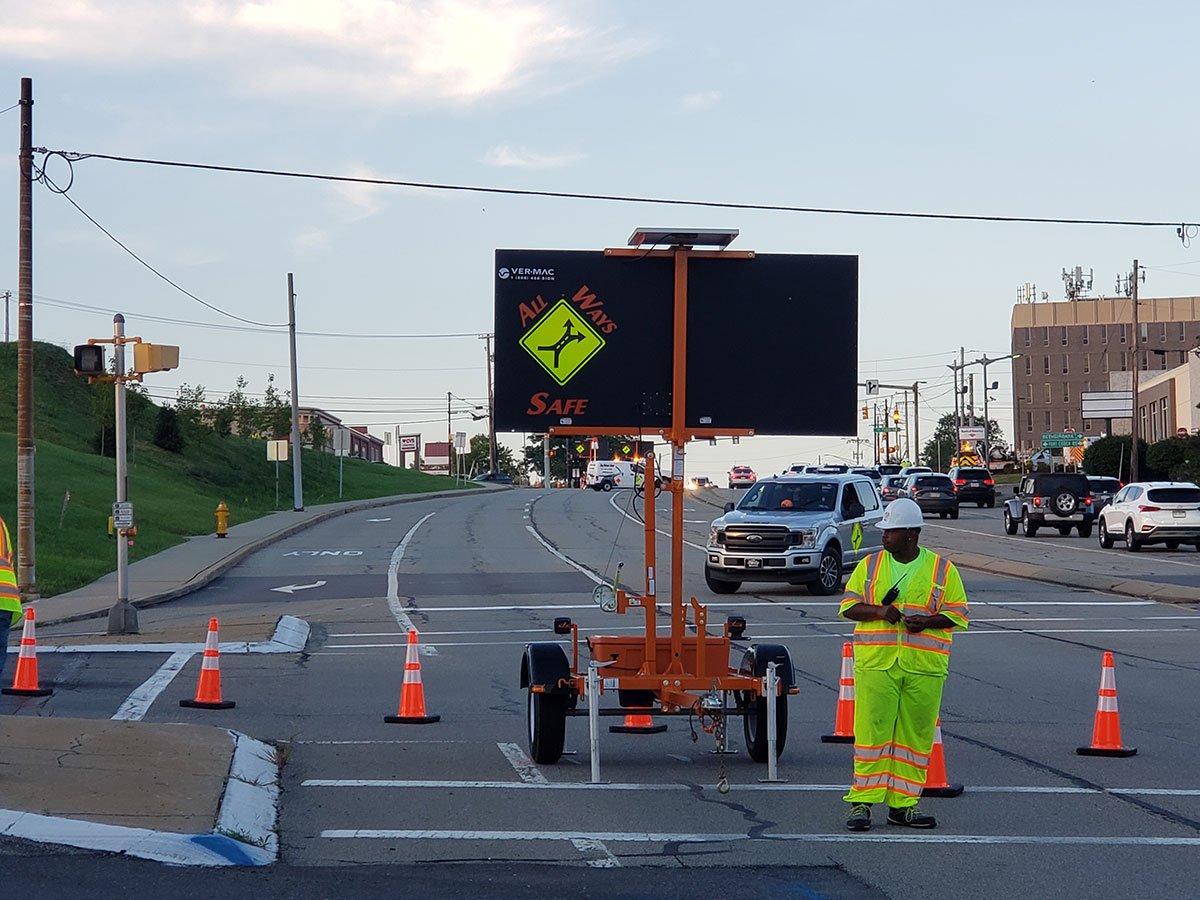
- Current certification card, verified with the issuing body
- Training records covering work zone safety and hazard identification
- Valid liability insurance and workers’ comp coverage
- Documented no-show and backup policy
- Emergency response capability and response times
- References from comparable projects
For agencies, add two more checks: who holds the certification records, and what recourse you have if staffing falls short. Get that backup plan in writing. If a partner cannot answer those questions clearly, walk away.
Insurance, Liability, and Equipment You Need in Place
Liability insurance is not optional when flaggers direct live traffic. One work-related injury in a work zone can turn into a claim that names your company, and the claim does not wait for the project to finish. Confirm coverage before crews arrive, and confirm it in writing.
Insurance and Liability Checks
What to verify on the insurance side:
- General liability limits that match your project size. Ask for the certificate of insurance (COI) and check that the limits are at least as high as the limits your own contract requires. A COI is a snapshot, not a guarantee, confirm the policy is current and the named insured matches the entity sending workers.
- Workers’ comp for every flagger on site. In most states, any employer with employees must carry workers’ comp, and a staffing agency should be able to show coverage for the workers it places. If a flagger is classified as an independent contractor, confirm who carries the coverage, because if the classification is wrong, the claim can land on you.
- Additional insured status for your company, where applicable. Ask to be named as an additional insured on the agency’s general liability policy. This is a common contract requirement and a reasonable ask; a partner who resists it is telling you something.
- Auto liability if flaggers drive company vehicles or transport equipment. Work zone injuries often involve vehicles, and auto coverage is a separate policy from general liability.
Watch out: a certificate of insurance that lists an expired policy period or a named insured different from the company you are contracting with is a red flag, not a paperwork detail. Ask for a corrected COI before anyone sets foot on site.
Equipment and PPE: Who Provides What
Equipment and PPE matter as much as insurance, and the split between what the site provides and what the flagger brings is where gaps appear.
Site-provided (you or the general contractor):
- Stop/slow paddle (the standard 18-inch octagonal paddle is common; confirm the size your state’s MUTCD supplement requires)
- Traffic cones and channelizing devices for the taper and work zone
- Work zone signage, advance warning signs, flagger-ahead signs, and any portable changeable message signs
- Lighting for night shifts, including floodlights and reflective sheeting on devices
- Two-way radios or a communication plan between flagger stations
- A written traffic control plan and site safety plan on site
Flagger-provided (confirm before the shift):
- High-visibility clothing meeting the ANSI/ISEA 107 standard, Class 2 or Class 3 depending on the speed and complexity of the road
- Hard hat
- Safety glasses, gloves, and sturdy boots
- Rain gear and cold-weather layers for the season
- A current certification card on their person
Missing gear is a hazard identification failure waiting to happen.
If you hire through an agency, put the equipment split in the contract: who supplies the paddle, who supplies the cones, and who pays for replacement when gear is damaged.
Get a Quote and Lock In Your Certified Flagger Crew
The real test of any hiring decision is what happens on a bad day: a no-show at 5 a.m., a storm that closes a lane overnight, a certification that lapsed without warning.
ALL Ways Safe handles those days for crews across the Greater Tri-State and Mid-Atlantic regions. You can browse more guidance in our blog before you call.
Get started with ALL Ways Safe and put certified, insured flaggers on your site without the scheduling gamble.
Hiring flaggers is a compliance decision first and a staffing decision second.
Frequently Asked Questions
What certifications are required for construction flaggers?
OSHA standard 1926.201(a) requires that every flagger on a worksite be certified and thoroughly trained. Beyond that federal baseline, most states and many municipalities set their own traffic control certification requirements, often tied to the Manual on Uniform Traffic Control Devices (MUTCD). Before you hire flaggers, confirm the specific card or certificate your state accepts, check the expiration date, and keep a copy on file for each worker. Ask for the training provider’s name and the date of issue, not just a verbal assurance.
How much does it cost to hire flaggers, and what affects the hourly rate?
The cost of traffic control services per hour varies with shift length, site complexity, travel distance, and whether you need 24/7 coverage or emergency mobilization. Certified flagger pay is a major input: Certified flagger pay is a major input to the overall cost, before agency overhead, insurance, and equipment. Pricing for any specific project depends on scope, so request a written quote rather than working from a generic rate.
How do you determine how many flaggers are needed for a site?
Start with your traffic control plan. The number of flaggers depends on the number of travel lanes affected, sight distance, traffic volume, and how many access points the work zone has. A single-lane closure on a low-volume road may need one flagger with a stop paddle; a multi-lane utility repair with heavy traffic often needs two or more plus a supervisor. Build the count into the plan before you request staffing so the crew size matches the actual hazard.
How do you verify a flagger’s training credentials?
Ask for the certificate itself, not a summary. Check the issuing organization, the certification number, the issue and expiration dates, and whether the card matches the state where the work happens. Call the training provider to confirm the record if anything looks off. A reputable staffing partner will supply copies for every worker before mobilization and will tell you which certifications their crews hold. If a provider hesitates to share documentation, that is your answer.
