Quick Summary
The best traffic control service provider keeps work zones safe with certified flaggers, correctly set devices matched to an approved plan, active monitoring and clear communication. Verify current certifications, a detailed work zone plan, staffing backup and a written no-show procedure before you choose.
- Ask every provider for current, dated flagger certificates for each person on your site.
- Request a sample work zone traffic control plan with specific device counts and staffing positions.
- Confirm staffing the day before work, not just the morning of, and get the no-show remedy in writing.
- Compare quotes only when each covers the same scope: staffing, devices, planning and removal.
- Check emergency deployment speed and how many flaggers can be fielded on short notice.
Table of Contents
- What a Traffic Control Service Provider Actually Delivers
- Verifying Certifications, MUTCD Training and Safety Protocols
- How Providers Build a Work Zone Traffic Control Plan
- Flagging Services: Staffing Reliability and No-Show Protection
- Understanding Traffic Control Services Cost and What Drives the Quote
- Emergency Traffic Control Services and Rapid Deployment Capacity
- Requesting a Quote and Checking Fit for Your Project Size
- Frequently Asked Questions
What a Traffic Control Service Provider Actually Delivers
A traffic control service provider keeps drivers, pedestrians and crews safe while work happens on or near a roadway. That usually means flaggers, signage, cones, arrow boards and a documented plan. The best providers handle all of it so your crew can focus on the job itself.
Last Updated: November 5, 2026
At ALL Ways Safe, we see the same gap again and again. Clients assume “traffic control” means a person with a sign. In practice, the work covers setup, staffing, equipment and ongoing monitoring for the entire length of a project. Choosing the right traffic control service means understanding each piece before you sign anything.
The federal standard that governs most of this work is the Manual on Uniform Traffic Control Devices. The Manual on Uniform Traffic Control Devices, administered by the Federal Highway Administration sets the national rules for signs, markings and devices in work zones. A qualified provider should know it well and apply it on every site.
Expect a good provider to deliver four core things:
- Certified flaggers trained to direct traffic safely and consistently
- Device setup and removal that matches the approved work zone plan
- Active monitoring so problems get fixed before they become incidents
- Clear communication with your project team and the public
Verifying Certifications, MUTCD Training and Safety Protocols
Certification is the first thing to verify, and it is easy to check. Ask every provider to show current flagger certification for each person who will work your site, along with training records that reference the MUTCD. Our woman-owned, family-run certification details explain our WBENC status. Certificates should be dated and current.
Ask about the protocols behind the certificates, too. Strong providers can explain how they brief crews before each shift, how they handle vehicle intrusions and what happens when a device is knocked over. Vague answers are a warning sign.
Watch out: a flagger who was trained once years ago and never refreshed is not the same as one with current, documented training. Request recent certificates, not a general claim of experience.
How Providers Build a Work Zone Traffic Control Plan
A work zone traffic control plan sets out exactly how traffic will move past your project. It defines the lane closures, the device layout, the flagging positions and the sequence for setting up and taking down each stage. A competent provider builds this plan before the first cone goes out.
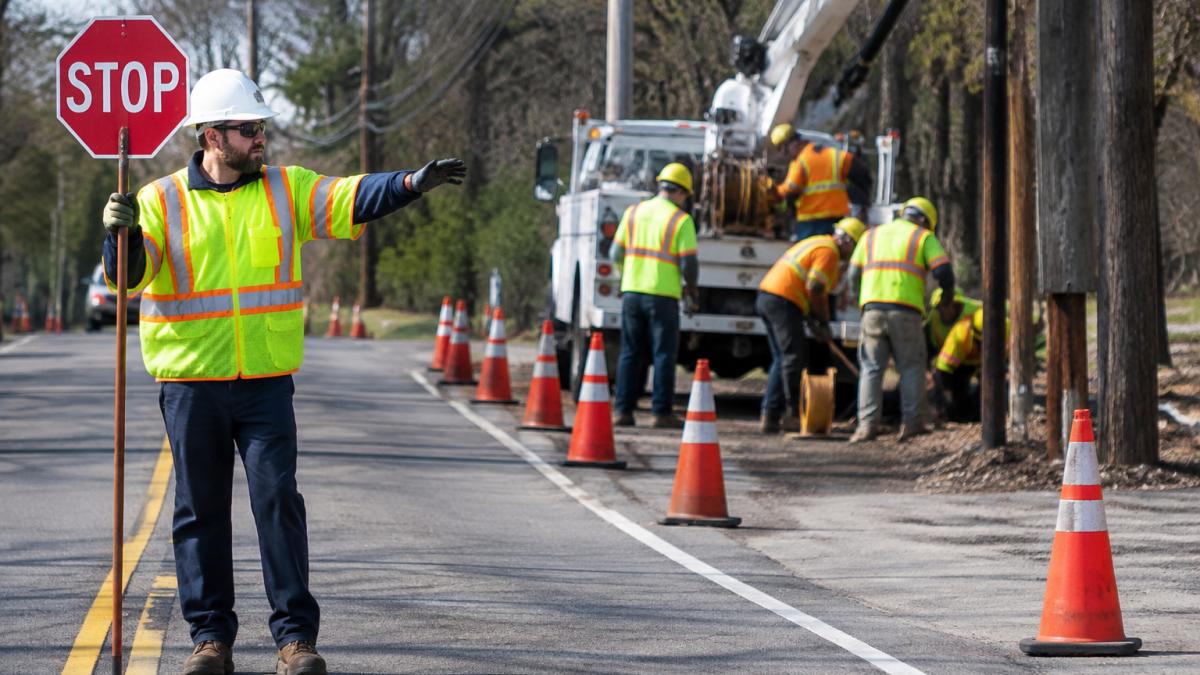
Good planning starts with a site visit. The provider measures sight distances, reviews speed limits and identifies access points for trucks and emergency vehicles. They then match the layout to the approved MUTCD standard. Your project manager should review the plan and sign off before work begins.
We recommend asking to see a sample plan from any provider you are considering. A detailed plan with specific device counts and staffing positions shows real planning. A generic template does not.
Flagging Services: Staffing Reliability and No-Show Protection
Staffing is where most traffic control problems start. A flagger who fails to show up can stall a utility repair or a paving crew for an entire shift. Ask every provider how they schedule backup flaggers and how quickly they can replace someone who calls out.
Look for providers who confirm staffing the day before, not just the morning of. Ask what happens to your contract if they miss a shift. Reliable providers will tell you the plan and the remedy in writing.
Ask any provider for their specific no-show procedure and get the answer in your contract.
The article’s key staffing questions are worth comparing side by side before you choose a provider.
| Question to ask | Why it matters | What good looks like |
|---|---|---|
| Staffing confirmed | Prevents missed shifts | Confirmed the day before |
| Backup flaggers | Covers call-outs fast | Replacement plan in place |
| No-show procedure | Protects your schedule | Written in the contract |
| Missed-shift remedy | Limits your losses | Stated in writing |
Understanding Traffic Control Services Cost and What Drives the Quote
Pricing for traffic control depends on the scope of your project, not a single flat rate. The main drivers are the number of flaggers, the hours covered, the length of the closure, the equipment needed and whether the work runs at night or on weekends.
Pricing depends on quantity, dates and delivery. For current prices or a quote tailored to your project, contact ALL Ways Safe directly. When you compare quotes, make sure each one covers the same scope: staffing, devices, planning and removal.
Be cautious of a quote that looks far lower than the rest. It often leaves out equipment, backup staffing or the planning work that keeps your site compliant.
Emergency Traffic Control Services and Rapid Deployment Capacity
Emergency work, such as a storm response or an urgent utility failure, needs crews mobilized within hours. Not every provider can do that. Ask specifically how fast they can deploy, how many flaggers they can field on short notice and whether they have equipment staged for emergencies.
ALL Ways Safe offers rapid emergency and storm response, and our team is available 24 hours a day, 7 days a week, 365 days a year. Our Making Traffic Safe Again blog, with recent safety and traffic control updates shares ongoing guidance on how we approach urgent work zones.
Requesting a Quote and Checking Fit for Your Project Size
Before you request a quote, define your project clearly. Include the location, expected dates, the type of work, the hours you need covered and any special requirements, such as night work or a specific plan you have already approved.
Then ask each provider the questions that matter most for your situation:
- Can you staff my project at my size and schedule?
- What is your no-show procedure?
- Can you provide current flagger certificates?
- Who builds and approves the work zone plan?
Smaller municipalities and public works departments should confirm the provider has handled projects of their scale before committing.
When you are ready, request a quote from ALL Ways Safe and compare it against the scope criteria above. You can review ALL Ways Safe’s certification and training details before you reach out.
Frequently Asked Questions
What services does a traffic control company provide?
A traffic control company typically supplies certified flaggers, traffic control devices such as cones, barricades, signs and arrow boards, and a plan for setting them up in line with the Manual on Uniform Traffic Control Devices (MUTCD) published by the Federal Highway Administration. Many providers also handle work zone design, lane closure permits coordination and temporary lighting. Ask each provider to list exactly which of these services are included in its quote and which are billed separately.
How do I verify that flaggers are properly trained?
Ask for proof that each flagger holds current training that covers MUTCD flagging standards and the work zone rules your state requires. Request copies of certificates before the crew arrives, and confirm that the provider keeps training records it can produce on request. Verifying these details up front reduces the risk of a crew arriving without the qualifications your project or municipality requires.
How much do traffic control services cost?
Pricing depends on the number of flaggers, the length of the shift, the equipment needed, the number of days, and whether work is scheduled or on-call. Because these variables change from project to project, standard rates are not listed here. Request a written quote from ALL Ways Safe for current pricing based on your specific site and schedule, and compare quotes on the same scope of work.
Can a traffic control provider respond to an emergency within hours?
Some providers maintain on-call staffing and equipment for storm response, utility emergencies and other urgent closures. When comparing providers, ask how quickly they can mobilize, how many crews they can field at once, and what happens if the primary crew cannot arrive. ALL Ways Safe offers 24/7 availability, so ask for its current emergency response commitments in writing as part of your quote.
