Last Updated: November 1, 2026
Quick Summary
Yes, most municipal projects that close or shift a travel lane, narrow a sidewalk, or work near moving traffic need a traffic control plan. Whether one is required depends on where the work happens and how it affects travel lanes, and your local permitting office can confirm the exact requirement before work begins.
- Small utility repairs on busy streets can create as much risk as major construction.
- Lane closures, lane shifts, sidewalk closures, and night work generally call for a documented plan.
- Many agencies require an approved plan before they will issue a permit, even for short jobs.
- A reusable submittal packet with plan drawing, device list, and contact sheet shortens review time.
- Check the Manual on Uniform Traffic Control Devices and any local supplement for spacing requirements.
Table of Contents
- When a Municipal Project Requires a Traffic Control Plan
- Why Traffic Control Planning Protects Workers and Road Users
- Traffic Control Plan Template: Core Components to Include
- Work Zone Traffic Control Devices and Where to Place Them
- Building a Pedestrian Traffic Control Plan for Sidewalks and Crosswalks
- Flagging Services for Construction Projects: When Flaggers Are Needed
- Your Next Step: Requesting a Quote for Your Municipal Work Zone
- Frequently Asked Questions
When a Municipal Project Requires a Traffic Control Plan
Most municipal crews assume a traffic control plan only matters for large highway jobs. That assumption causes trouble.
Traffic control for municipal projects covers the signs, barriers, flaggers, and lane changes used to move drivers, pedestrians, and workers safely through a work zone.
Whether you need one depends on where the work happens and how it affects the travel lanes. Federal guidance in the Manual on Uniform Traffic Control Devices, the national standard for work-zone signing and layout sets the baseline, and your state or local agency may add its own requirements.
- Lane closures or shifts on any public roadway
- Work within a few feet of moving traffic
- Sidewalk or crosswalk closures
Check with your local permitting office early. Many agencies require a plan before they will issue a permit, even for short jobs.
Why Traffic Control Planning Protects Workers and Road Users
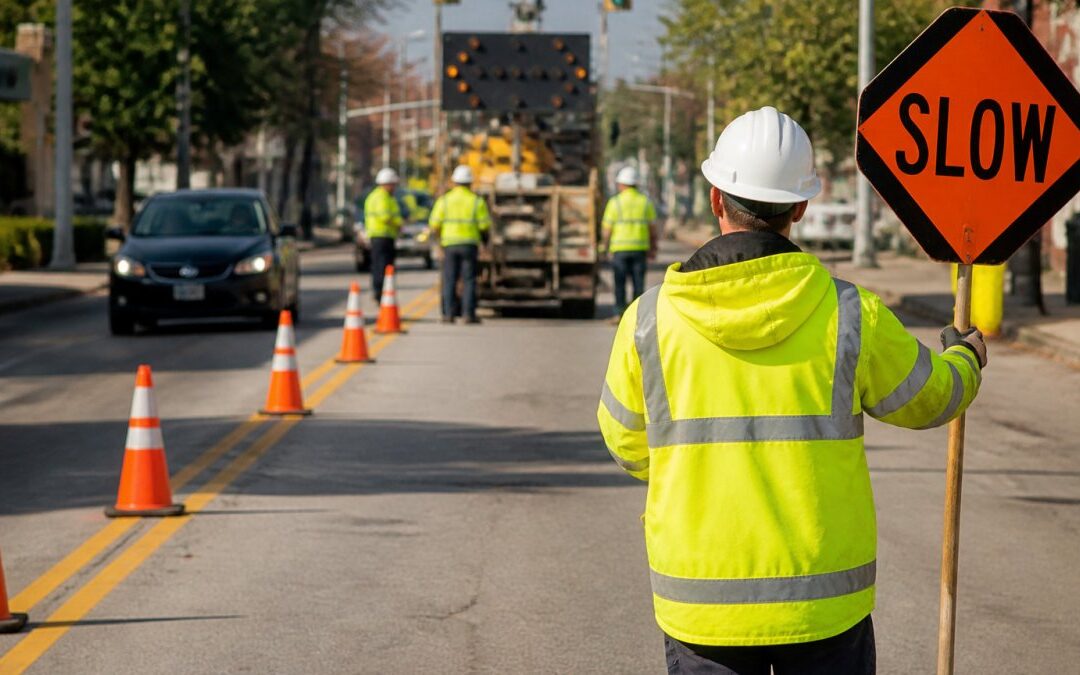
Planning is what keeps a work zone predictable. Without it, drivers see a sudden lane closure and react at the last second, and crews have no clear place to stand.
A written plan answers the questions that cause accidents: where drivers get warned, how far back the warning starts, where traffic goes, and who is responsible for each control point. Consider the Federal Highway Administration work-zone safety resources for guidance on how advance warning and lane transitions reduce crashes.
Planning also protects the public side of the project. A good plan keeps emergency vehicles, school buses, and delivery trucks moving, and it sets out pedestrian access so people are not forced into the street.
- Predictable driver behavior through consistent signing
- Clear positions for workers and flaggers
- Fewer last-minute changes that create hazards
Traffic Control Plan Template: Core Components to Include
A traffic control plan template gives your team a starting point, so you do not build a plan from scratch for every job. Most municipal plans include the same core parts, adjusted for the site. What separates a plan that clears review from one that bounces back is how completely those parts are documented and how well they connect to the agency’s approval process.
- Project summary: location, dates, work hours, and a short description of the work
- Road classification and speed limit: the posted speed and road type
- Lane and traffic configuration: which lanes close and how traffic shifts
From Template to Approved Plan: The Municipal Review Workflow
A template is only the starting point. The plan still has to move through the agency’s review and approval process, and knowing that sequence up front saves weeks. While every jurisdiction runs its own process, a common municipal workflow looks like this:
- Pre-application site assessment. Walk the site with the project engineer and note lane widths, sight distance, pedestrian generators (bus stops, school entrances, building doors), and any utilities that affect device placement. Photograph the existing signage and pavement markings.
- Permit application and plan submittal. Submit the traffic control plan with the right-of-way or encroachment permit application. Agencies often ask for the plan drawing, the work schedule, the device list, and proof of flagger training. Confirm the submittal checklist with the permitting office before you file, because missing items are the most common cause of delay.
- Agency review and comments. The traffic engineer or inspector reviews for compliance with the Manual on Uniform Traffic Control Devices and any local supplement. Expect comments on taper lengths, advance warning distances, and pedestrian routing. Respond in writing and resubmit the revised drawing.
- Approval and pre-construction meeting. Once approved, hold a short pre-construction meeting with the contractor, the agency inspector, and emergency services. Confirm device placement, flagger positions, and the inspection schedule.
- Active-work monitoring. Inspectors check devices daily and after any incident. Keep a log of inspections, corrections, and complaints.
- Closeout. Remove devices, restore pavement markings and signage, and document the final condition. Some agencies require a closeout inspection before releasing the permit.
Build a reusable submittal packet: a cover sheet, the plan drawing, the device list, the flagger certification roster, and the contact sheet. Reusing the packet across projects shortens review time and keeps every plan consistent.
Decision Points That Shape the Plan
A few choices drive most of the plan’s content, and getting them right early prevents rework:
- Duration and work hours. Short daytime jobs can often use a simplified plan; night work or multi-week closures usually require a full detour analysis and lighting plan.
- Road classification and speed. Higher speeds demand longer advance warning and longer tapers, so check the standard spacing tables rather than guessing.
- Pedestrian and bicycle generators. If the site affects a school route, transit stop, or accessible route, the plan must show how those users are protected.
Keep the plan short enough that a supervisor can read it in a few minutes. Attach a simple sketch of the site, since a clear drawing is often easier to follow than paragraphs of text, and make sure the drawing matches the device list exactly.
Most municipal plans share the same core parts, and the table below lists them with what each one covers.
| Component | What it covers | Note |
|---|---|---|
| Project summary | Location, dates, work hours | Short description of the work |
| Road classification | Road type and posted speed | Sets warning distances |
| Lane configuration | Lanes closed and traffic shifts | Shows how traffic moves |
| Advance warning | Signs placed before the zone | Placed at specified distances |
| Taper and channelization | Cones, drums, or barriers | Guides traffic out of the lane |
| Pedestrian access | How people walk or ride through | Keeps people out of the street |
| Flagger staffing | Where flaggers stand and when | Needed when fixed devices are not enough |
| Inspection schedule | How often devices are checked | Devices are repaired when needed |
Work Zone Traffic Control Devices and Where to Place Them
Work zone traffic control devices are the signs, cones, barricades, and drums that tell drivers what to expect.
Start with advance warning signs. Place them far enough ahead of the work that drivers can slow down before reaching the closure.
Next, set the channelizing devices. Cones and drums form a taper that moves drivers smoothly out of their lane.
Finally, position barricades and warning lights at the closed area itself.
- Use advance warning signs placed at the distances your plan specifies
- Build tapers that match the speed limit
- Light the closure area at night
Tailoring Controls to the Project Context
The same device set behaves differently depending on where it is installed. Use these context-specific adjustments as a starting point, then confirm with the agency’s traffic engineer.
- Urban streets. Space is tight and pedestrian traffic is heavy. Favor short, well-signed tapers, protected walkways, and barricades that separate people from equipment. Watch for driveway and loading-zone conflicts.
- Rural roads. Higher speeds and longer sight distances mean longer advance warning and longer tapers. Add warning signs at curves and crests so drivers are not surprised by the closure.
- School zones. Time the work around arrival and dismissal, and coordinate with the school on crossing-guard positions. Use high-visibility devices and consider adult crossing guards in addition to flaggers.
A taper that looks fine on paper can fail once cones are knocked out of line. Check the layout at the start of every shift, and after any incident, before traffic resumes.
Device Selection Trade-offs
Choosing devices is a series of trade-offs. Cones are fast to set and move but blow over easily; drums stay put but take more space and labor. Barricades block traffic clearly but must be visible at night. Water-filled barriers separate workers from traffic but need a water source and a plan for filling and draining. Match the device to the speed, duration, and space available, and keep a small reserve on site so a damaged device can be replaced immediately.
Building a Pedestrian Traffic Control Plan for Sidewalks and Crosswalks
A pedestrian traffic control plan keeps people walking safely when a sidewalk or crosswalk is closed. Many municipal projects overlook this part, and it is often where complaints and liability claims begin.
Start by identifying every pedestrian route that the project affects. Include bus stops, school routes, and building entrances.
Accessible routes matter. Work with your agency to confirm that any detour still meets accessibility requirements, including a path wide enough for wheelchairs and strollers.
- Keep a protected walkway open whenever possible
- Post detour signs before the closure begins
- Provide an accessible path for wheelchair users
- Use barriers that people can detect with a cane
Flagging Services for Construction Projects: When Flaggers Are Needed
Flaggers are workers who control traffic by hand, usually with a stop/slow paddle or flags.
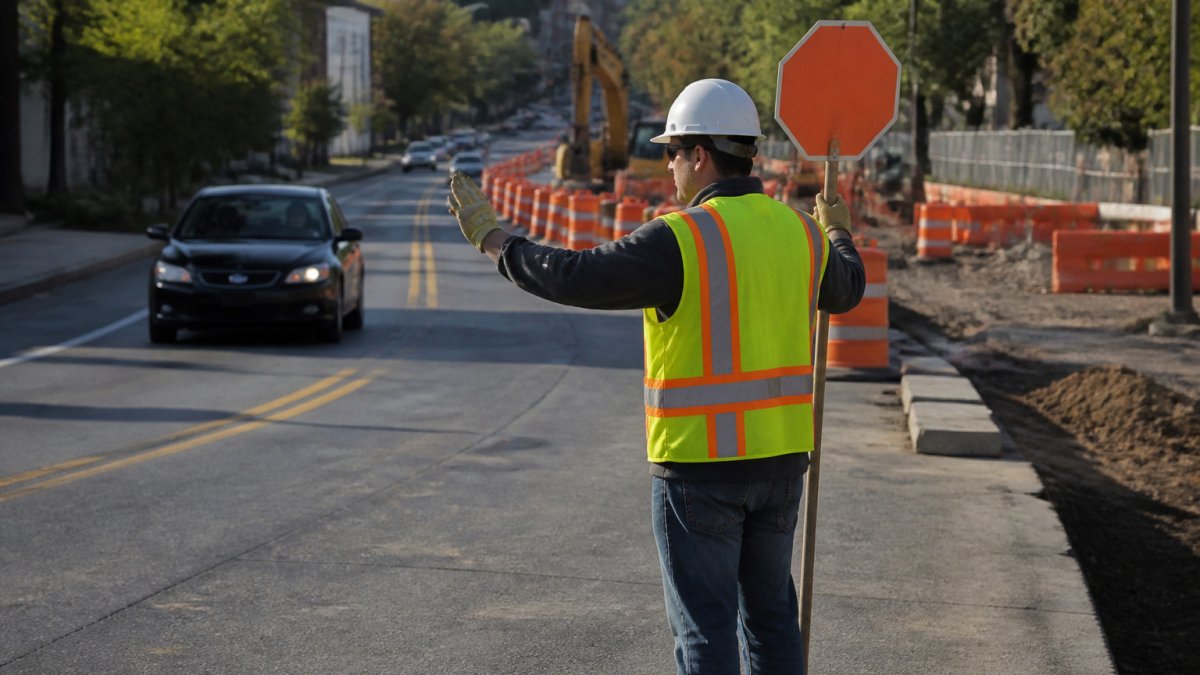
Flagging services for construction projects are often the most flexible part of a traffic control plan, because a flagger can respond to changing conditions in real time.
When you hire flaggers, confirm they are trained and certified and that they wear high-visibility clothing. Plan staffing for the full work hours, including breaks, so the crew is not left without coverage.
- Use flaggers for alternating one-lane traffic
- Position flaggers where they can be seen from a distance
- Confirm training and certification before the project starts
- Schedule backup coverage for breaks and absences
Your Next Step: Requesting a Quote for Your Municipal Work Zone
A traffic control plan is much easier to build when you know the site, the schedule, and the traffic pattern. Browse past traffic safety articles and updates to see the kinds of work-zone issues the company has covered.
To learn more about keeping work zones safe, explore the [explore related work-zone safety articles | allwayssafe.com/making-traffic-safe-again-archives/] on our blog. When you are ready to plan your project, [request a quote for your municipal work zone | allwayssafe.com] and our team will help you put the right controls in place.
Frequently Asked Questions
What should a traffic control plan for a municipal project include?
A traffic control plan for a municipal project should identify the work zone limits, the traffic control devices to be used such as signs, cones, barricades and arrow boards, the lane closure or shift strategy, the detour or alternate route, and the pedestrian and bicycle access provisions. It should also name the responsible party for setup, inspection and removal, and describe how emergency vehicles will keep access during the project. Agencies typically review the plan against the Manual on Uniform Traffic Control Devices (MUTCD) and the state department of transportation’s requirements before work begins.
Who is responsible for approving a traffic control plan?
Approval usually rests with the public agency that owns the right-of-way, such as the city or county public works or engineering department, or the state department of transportation when the work affects a state route. The plan is often prepared by the contractor or a traffic control consultant and then reviewed for compliance with the MUTCD and local ordinances. Where a permit is required for work in the public right-of-way, the traffic control plan is typically submitted as part of that permit application.
How do you keep pedestrians and cyclists safe around a construction zone?
Keep sidewalks open where possible, and when they must close, provide a signed, accessible detour that meets accessibility requirements. Use channelizing devices to separate pedestrians from work areas, and maintain clear sight lines at crosswalks. For bicycles, provide a marked detour or a shared lane with adequate signing. Review the pedestrian traffic control plan with the project team before setup and inspect it regularly during the project.
When should a municipality hire professional flaggers?
Hire professional flaggers when a work zone requires a person to stop and release traffic, such as single-lane operations on two-lane roads, intersections with limited visibility, or moving operations where signs and devices alone cannot control traffic safely. Flaggers should be trained to the MUTCD standard and equipped with proper high-visibility apparel. For schedules that change or require rapid mobilization, confirm staffing commitments and backup coverage in the contract. Request a quote from ALL Ways Safe through the company website for current pricing based on shift length, location and staffing needs.
